
 Free text 078 6005 2906
 247 Helpline 0808 808 8141
 Please donate
 Shop Now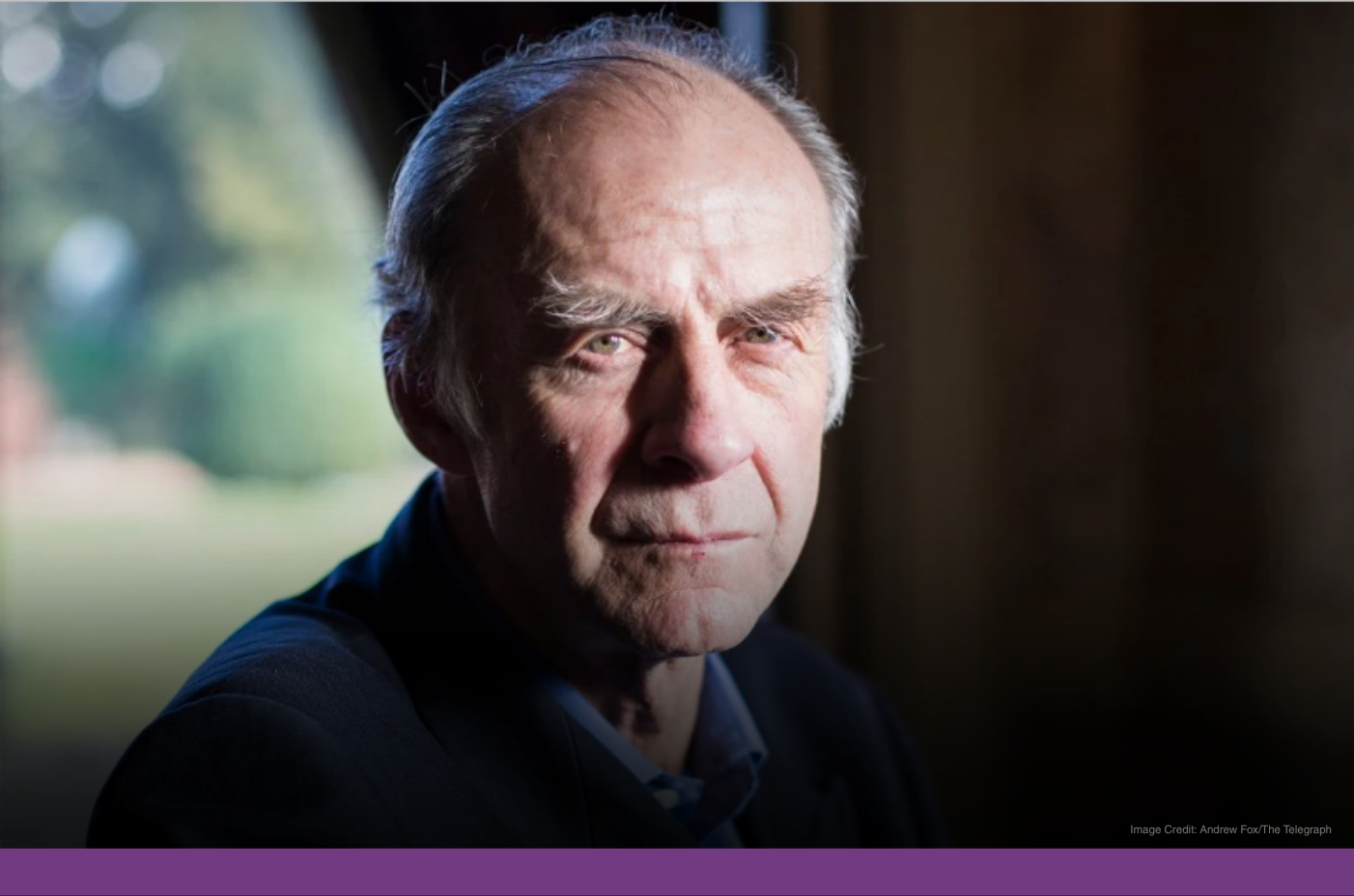
The recent reporting around Sir Ranulph Fiennes raises a number of difficult questions about ageing, autonomy, safeguarding and the exercise of power over an older person, particularly where a lasting power of attorney is involved.
The circumstances themselves are disputed, and it would clearly be inappropriate to reach conclusions about the rights and wrongs of an individual case on the basis of newspaper reports. There are differing accounts of Sir Ranulph’s circumstances, concerns have been raised by members of his family and others close to him, and there are legal and safeguarding processes designed to deal with precisely these kinds of disagreements.
What the story does provide, however, is an unusually public example of a set of issues which Hourglass encounters in much less visible circumstances every day.
As people grow older, particularly where ill health, frailty or questions of mental capacity begin to arise, the balance of power within families can change very quickly. Responsibilities which were once carried by the older person may gradually pass to somebody else. A relative may begin helping with the banking, dealing with correspondence, arranging medical appointments or making decisions about care. A lasting power of attorney may be put in place, sometimes years before it is ever needed, precisely so that somebody trusted can act if circumstances change.
In the great majority of cases, this is sensible and entirely appropriate. Families provide enormous amounts of support to older relatives, often under considerable pressure themselves, and powers of attorney are an important means of ensuring that somebody’s affairs can continue to be managed when they are no longer able to manage them alone. The difficulty arises when support begins to move into control, particularly when that change is gradual enough that nobody quite notices when the line has been crossed.
A power of attorney gives somebody authority to make certain decisions on behalf of another person. It does not confer ownership over that person, their relationships, their wishes or the way in which they live their life. Nor does growing older, becoming physically frail or requiring support mean that an individual suddenly ceases to have views which ought to be heard.
That distinction is especially important because mental capacity is frequently misunderstood. The legal starting point is that an adult is assumed to have capacity unless it is established that they do not, and capacity must be considered in relation to the particular decision being made. An older person is also entitled to make decisions which others may regard as eccentric, inconvenient or simply wrong. None of us loses our right to make a poor decision because somebody else believes they know better. Yet this is precisely where safeguarding in later life can become complicated.
An older person may become increasingly dependent upon one individual for transport, money, medication, access to medical care, communication with friends and family, or even something as basic as answering the telephone or opening the front door. None of these arrangements is necessarily problematic in itself, but where one person comes to control enough of those points of access, an imbalance develops which can be extremely difficult for outsiders to identify or challenge.
The language around that control can also sound entirely reasonable.
A visitor may be told that the older person is too tired to see them. A telephone call may be discouraged because it might cause distress. Financial decisions may be explained as necessary to protect the person from making mistakes. Choices about where somebody lives or who provides their care may be presented as the only practical option.
All of those explanations may, of course, be perfectly genuine. But they can also provide a very effective cover for coercion, isolation, neglect or financial abuse.
This is one of the particular difficulties with abuse in later life. It does not always resemble the forms of abuse which people expect to see. There may be no single incident which immediately triggers concern and no obvious physical injury. Instead, an older person’s world may become progressively narrower as decisions are taken away from them, contact with other people diminishes, finances are controlled elsewhere and one individual increasingly becomes the route through which everybody else must pass. Eventually, the person who is supposed to be providing support can become the gatekeeper to the older person themselves.
That presents an obvious safeguarding problem. If concerns are raised about the person who controls access, how do others establish independently what the older person wants? If somebody holds a power of attorney and is also speaking on the individual’s behalf, how easily can professionals or family members distinguish the wishes of the older person from the interpretation of the person representing them?
There are mechanisms within the law to deal with these situations, and the Office of the Public Guardian can investigate concerns about the conduct of an attorney. But identifying that there is a problem in the first place is not always straightforward, particularly where the person exercising control can plausibly describe their actions as being undertaken in the older person’s best interests.
It is also important to recognise that these situations are rarely simple. Families can disagree genuinely and profoundly about what constitutes appropriate care. Relationships may have been strained for decades. Caring responsibilities can be exhausting and emotionally difficult. There may be disputes about money, property or inheritance alongside genuine concern for somebody’s welfare. More than one of these things can be true at the same time.
That complexity should not distract us from the central principle, which is that the older person remains an individual with rights, preferences, relationships and a history of their own.
Safeguarding should therefore be about preserving autonomy wherever possible rather than removing it for administrative convenience. Where somebody genuinely lacks capacity to make a particular decision, those acting on their behalf still have a responsibility to consider the person's previous wishes, feelings, beliefs and values, and to interfere with their rights and freedoms as little as possible.
The public interest in the Sir Ranulph Fiennes case is inevitably heightened because of who he is. His life has been defined by independence, determination and an extraordinary degree of personal agency, and there is an obvious poignancy in seeing questions now being asked about who has the authority to make decisions on his behalf.
For Hourglass, however, the wider concern is with the many older people whose circumstances will never become the subject of newspaper reports or legal commentary.
There will be people across the country whose finances are being controlled by somebody else, whose relationships are being restricted, whose wishes are being discounted or whose care is being provided inadequately because another person's interests have gradually taken precedence over their own. In some cases the person responsible will hold a formal legal authority. In others, the control will have developed informally within a family over many years.
These cases rarely arrive with a simple label attached to them. They frequently sit somewhere between care, dependency, family responsibility and control, which is precisely why they can remain hidden for so long. The lesson from cases such as this should therefore be a fairly simple one. Growing older can mean needing more help from other people, and sometimes it can mean that others have to make decisions on our behalf. What it should never mean is that an older person's own voice becomes irrelevant.
The need for protection should not become an excuse for control, and the existence of legal authority should never prevent legitimate questions being asked about how that authority is being exercised.
Older people may need support. They do not cease to own their own lives.
- Richard Robinson, Hourglass CEO


